 Laue
Laue Plan The symmetry we meet everywhere.
A tiled floor, a wallpaper, a fabric, an Escher print: beneath each one lies the same grammar. There are only seventeen ways to repeat a motif in the plane. Laue Plan lets you discover them by drawing.



macOS 14 or later, Apple silicon and Intel; iPadOS 17 or later. Free download, Mac + iPad: 14-day trial, then CHF 30 to unlock, one purchase for both. On PC: Windows 10 (2004) and 11, x64 and ARM64, CHF 30.50 on the Microsoft Store. Interface and examples in 24 languages.
See the rule behind the pattern
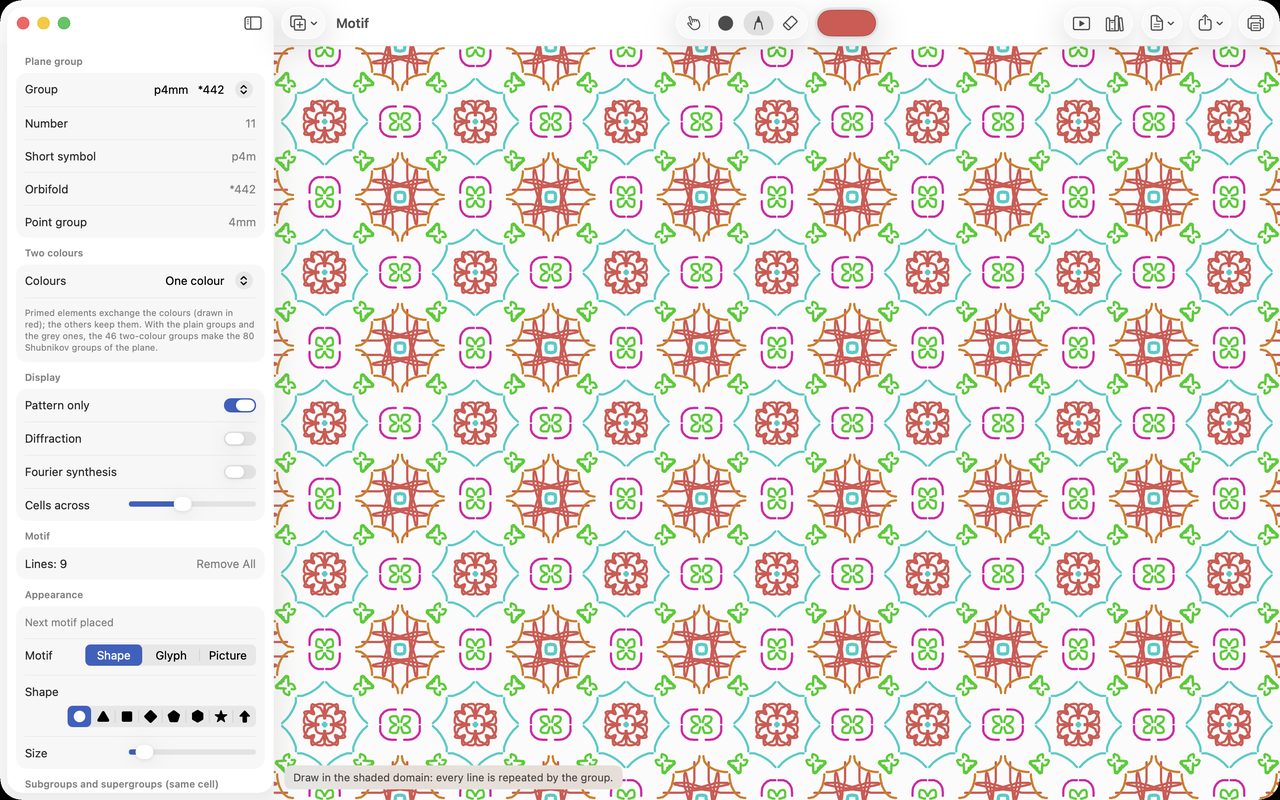
We walk past repeated patterns every day without seeing what holds them together. Yet the rules are few, and we can grasp them by playing. We believe that a motif repeating under your fingers teaches more than a list of symbols — to the pupil as to the designer, to the curious as to the researcher.
One stroke, seventeen ways to repeat it
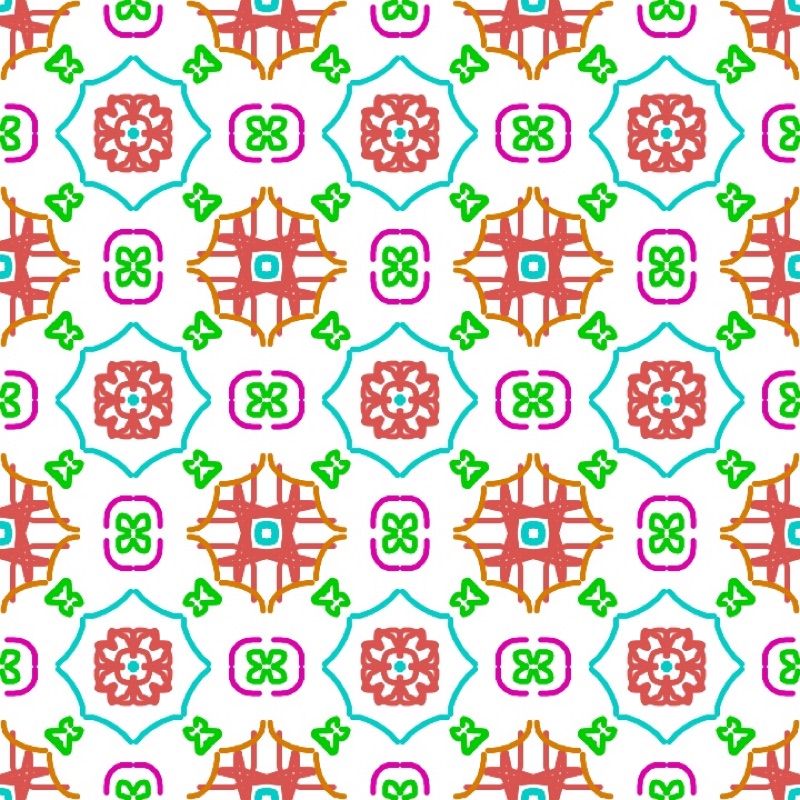
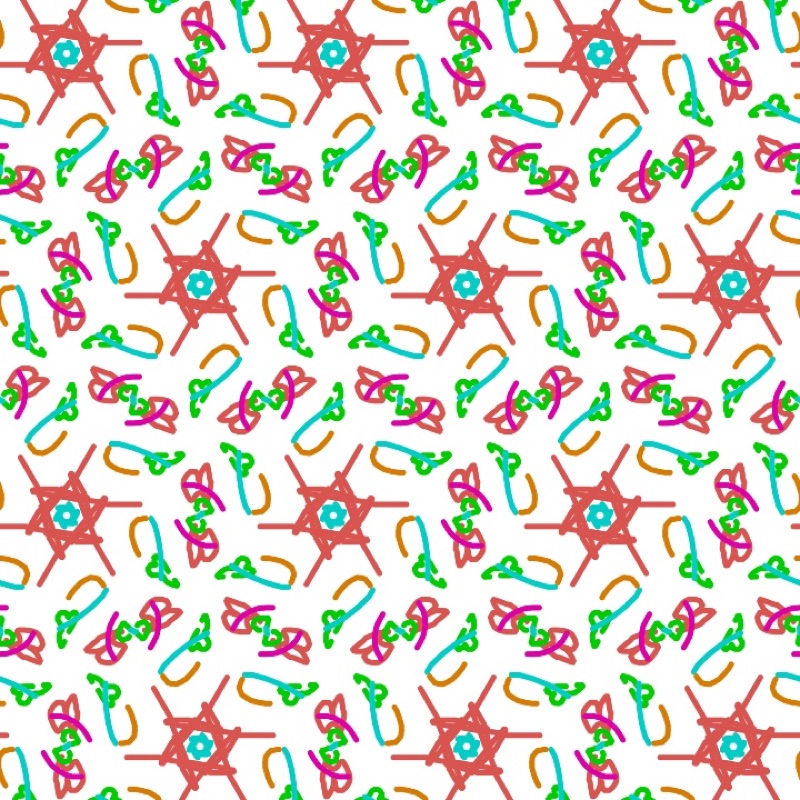
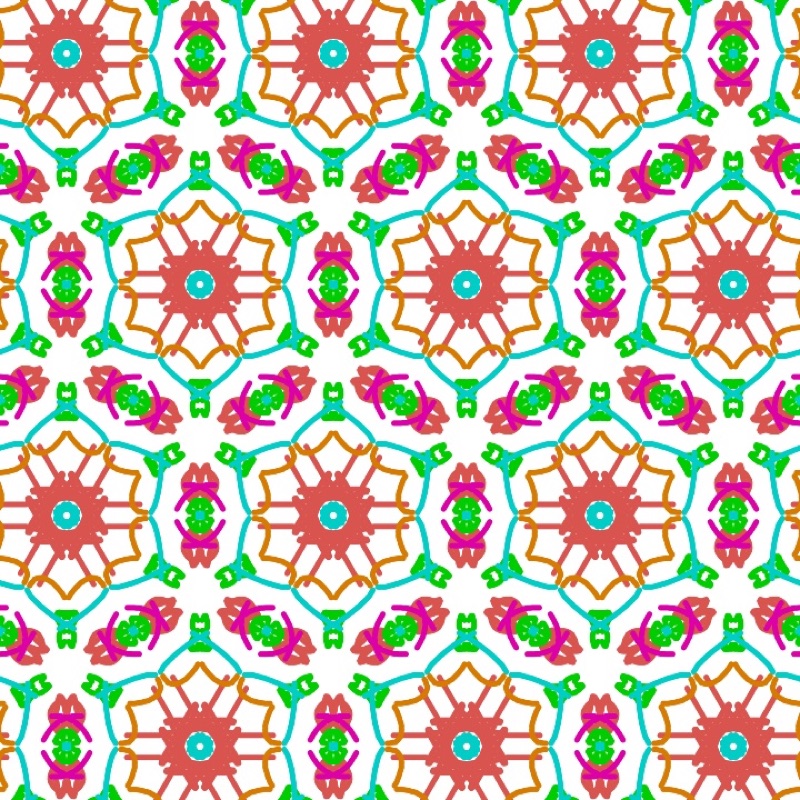
Draw a single piece: Laue Plan copies it everywhere, according to the rule you choose. The same freehand stroke becomes a rosette, a kaleidoscope or a scattered pattern depending on the group.
Mandalas
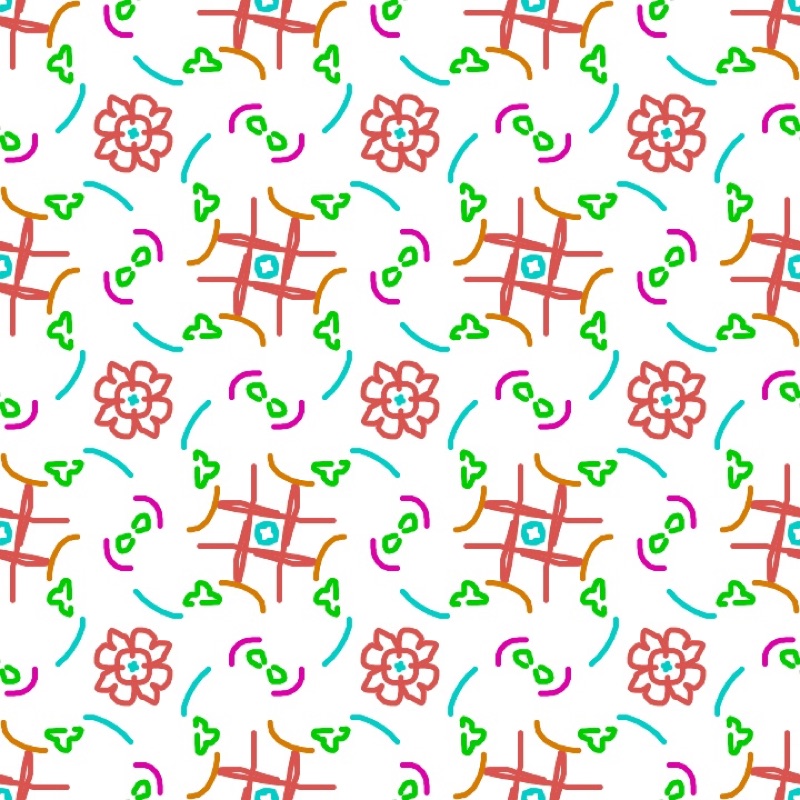
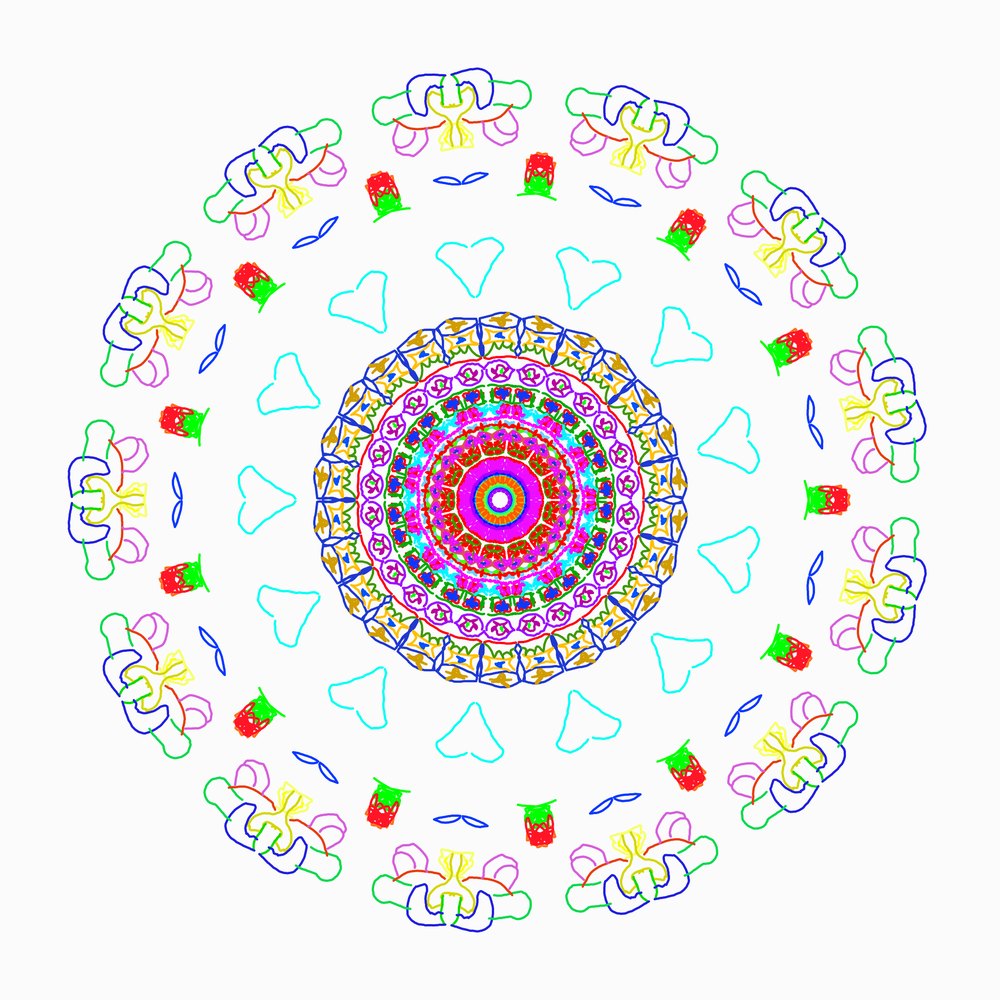
A rosette turns around its centre, and here any number of arms is allowed: five, eight, thirteen… Choose the order, with or without mirrors, and draw in a single sector: every stroke comes back all the way round. This one has thirteen arms, drawn freehand.
Mosaics of the East
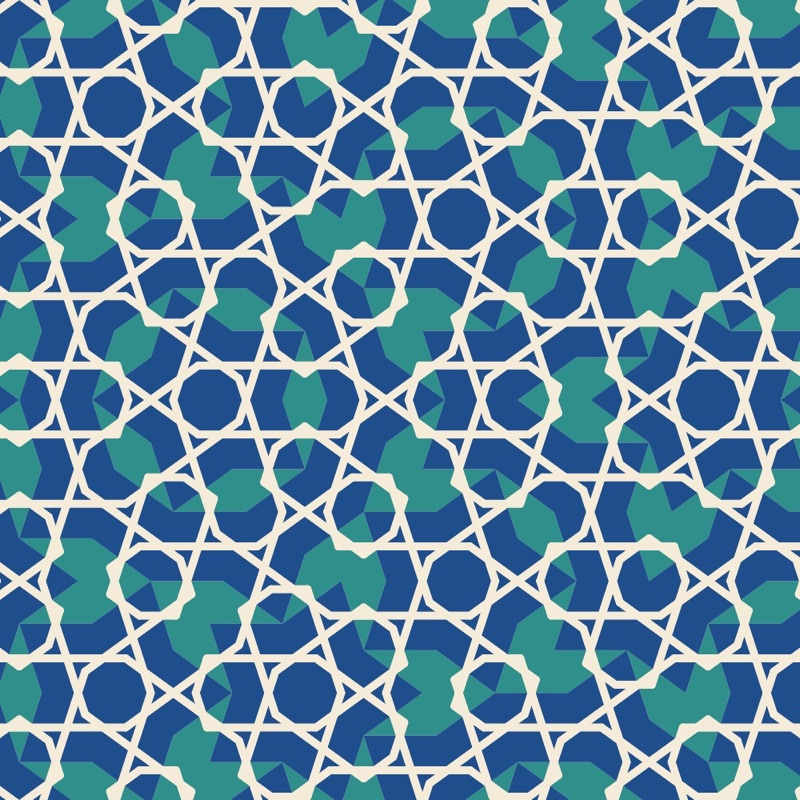
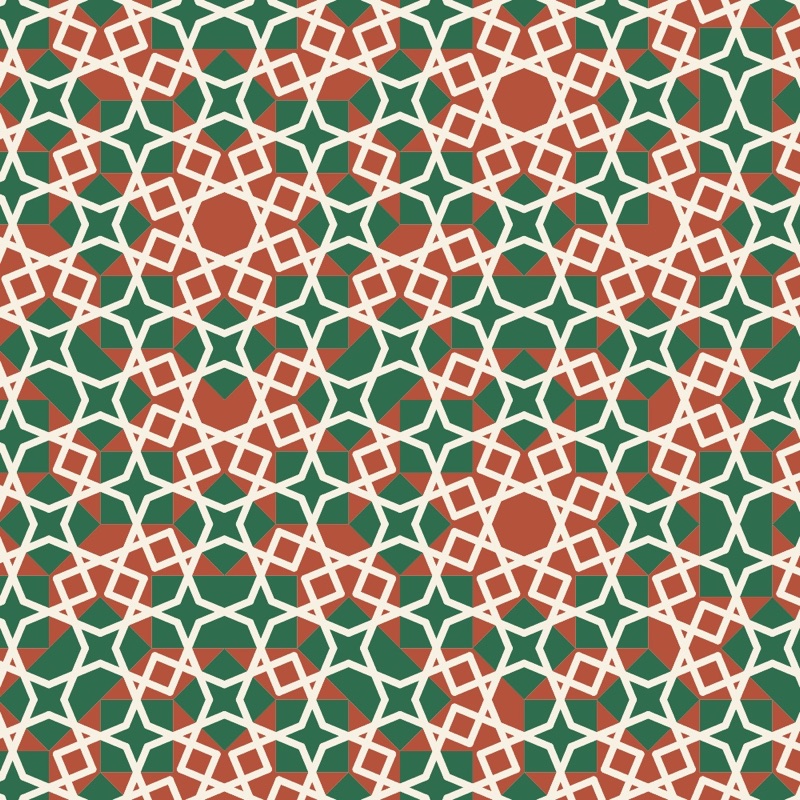
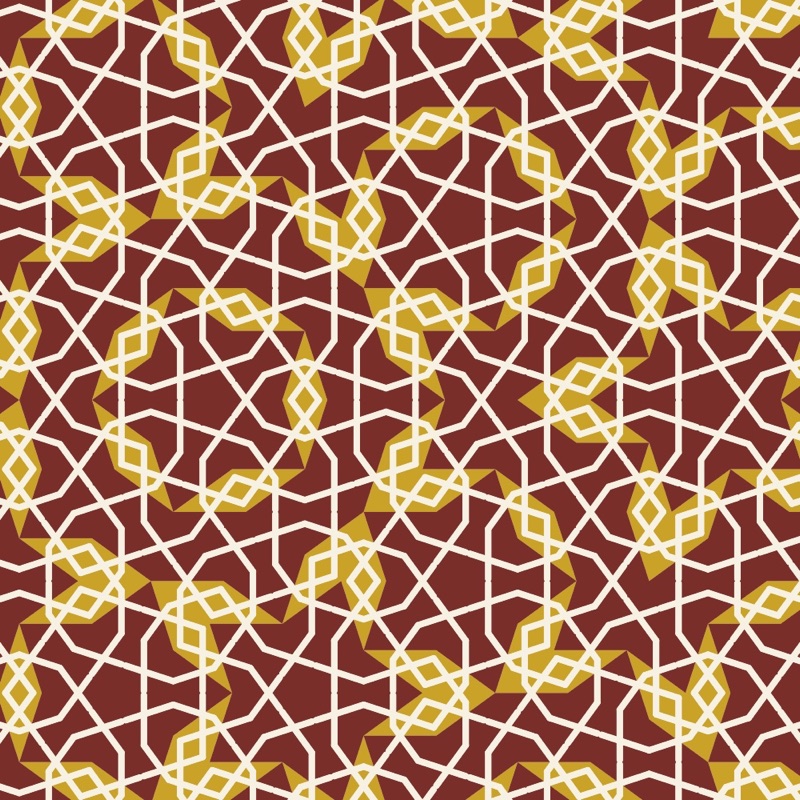
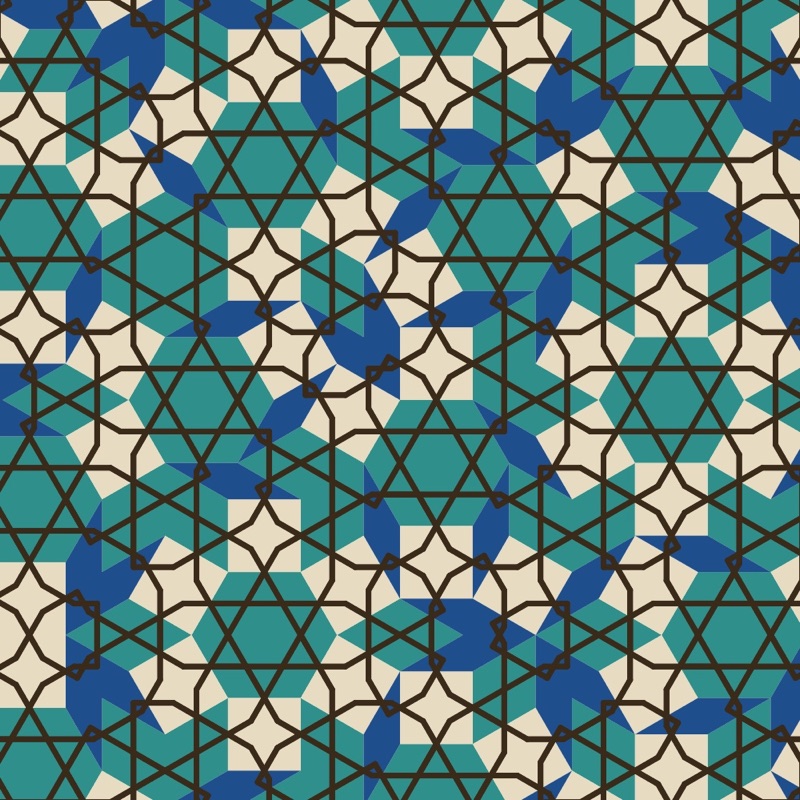
The craftsmen of Persia, Andalusia and the Maghreb explored these rules centuries before the mathematicians. Their strapwork, the girih, traces stars with eight, ten or twelve points. Those of the Darb-i Imam shrine in Isfahan (1453) follow a Penrose tiling almost exactly, a structure thought to have been discovered in 1974. Laue Plan lays these lines on Penrose, Ammann-Beenker and dodecagonal tilings: choose the colours of the tiles and the angle of the strapwork, or draw your own decoration on a tile. It then carries on across all the others.
Who is it for?
Pupils and students
Discover rotations, mirrors and glides by watching them act on what you drew, then recognise a group on your own: the tutor checks the answer and gives hints.
Teachers
In mathematics, the isometries of the plane; in physics and chemistry, a first step into crystallography and diffraction; in art, the frieze and the tiling. A presentation mode for the class, ready-made exercises.
Graphic and textile designers
A motif repeated without a single error, at the size you want: straight, half-drop or half-brick repeats, a print-ready PDF with bleed, separations for screen printing.
Lovers of Escher and mosaics
Lay a photograph of a tiled floor or a fabric under the motif, fit the cell to it, and find out which of the seventeen groups it follows. Compose Persian strapwork on a Penrose tiling.
Researchers
Penrose and Ammann-Beenker quasicrystals, the perpendicular space, the exact diffraction of the visible points, Fourier synthesis, and export of the lattice as CGD for Systre.
In three steps
Choose a group
One of the 17 plane groups or 7 friezes. Its fundamental domain and its symmetry elements appear, drawn as in the International Tables.
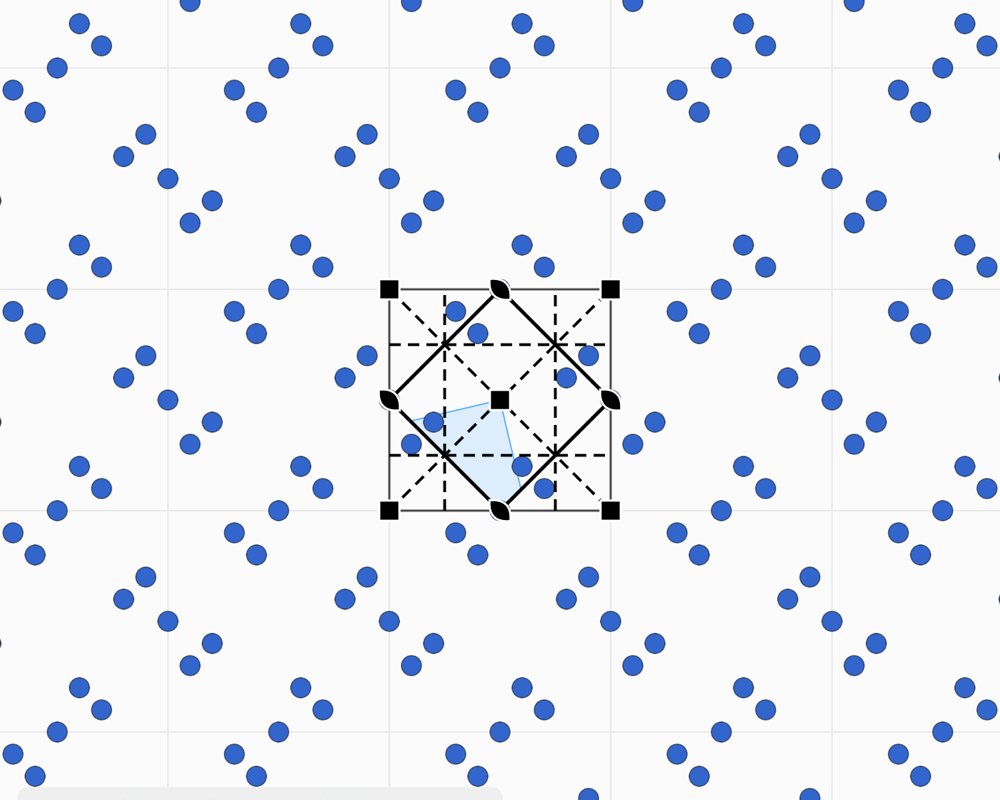
Draw a motif
A shape, a letter, an image, a freehand stroke: every copy appears at once, turned by the rotations, flipped by the mirrors.
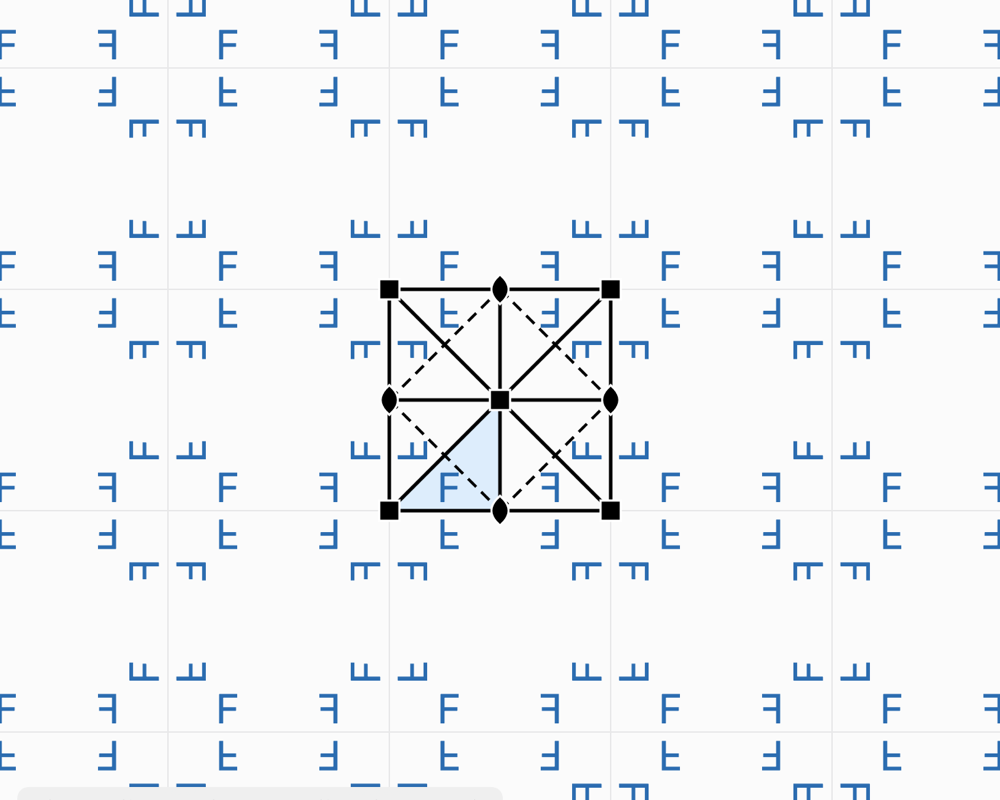
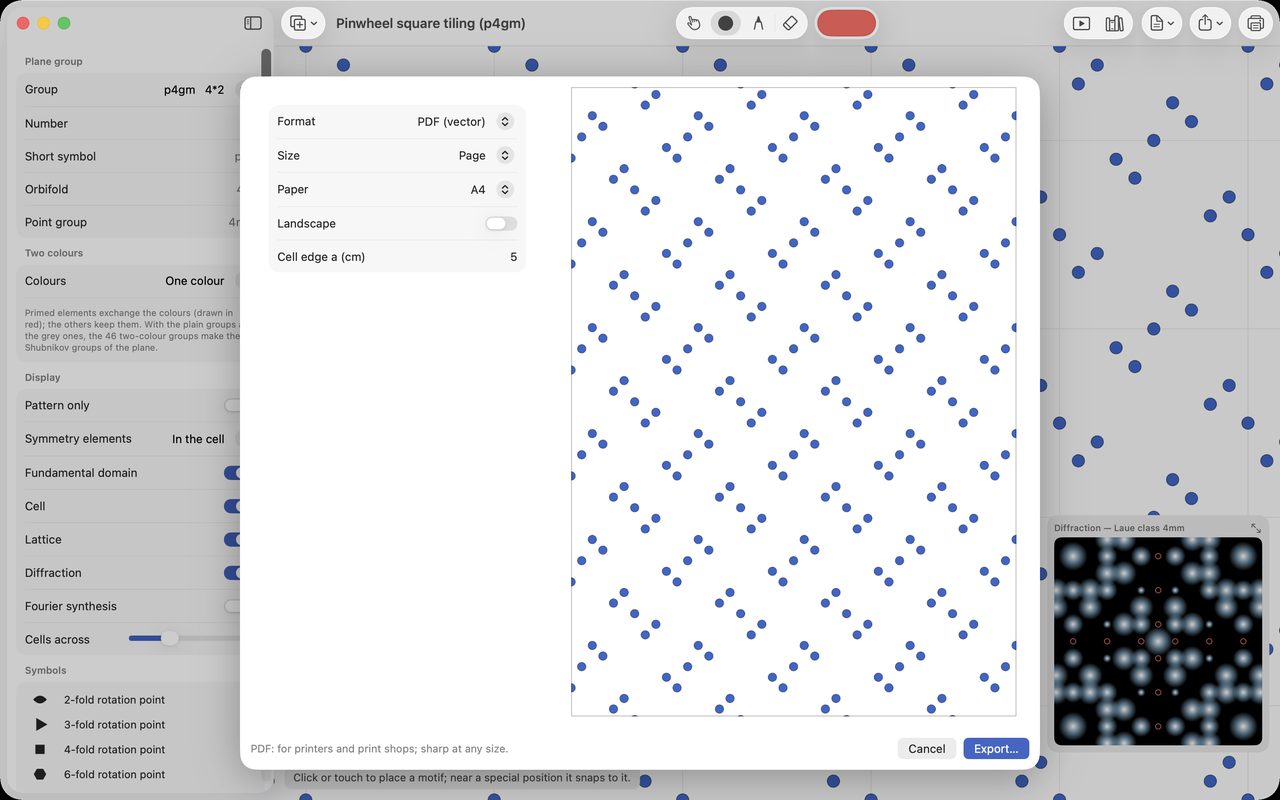
Explore and print
Change the group or the colours, look at the diffraction, then export the motif alone for screen, paper or fabric.
What Laue Plan contains
The groups
The 17 plane groups, the 7 friezes and the rosettes of mandalas (Cₙ and Dₙ, any order), by international symbol, number or orbifold notation, with their fundamental domain, their symmetry elements drawn as in the International Tables, and the list of their operations. Subgroups and supergroups with the same cell, and the 46 two-colour groups.
The motif
Shapes, characters, your own images, or a freehand drawing: every stroke is repeated by the group. A photograph of a tiled floor or a fabric goes under the motif so you can find its group; the background colour is yours to choose.
Diffraction
The pattern of each tiling, with its systematic absences and its Laue class, to enlarge, zoom and export. Fourier synthesis rebuilds the motif from its diffraction — with the true phases, zero or random phases, or the Patterson map.
Quasicrystals
Penrose, Ammann-Beenker and dodecagonal tilings, from de Bruijn grids or by inflation, with the perpendicular space; the visible points of a lattice and their exact diffraction. Coloured and decorated tiles: Penrose arcs, girih strapwork, or your own drawing.
Print and fabric
The motif alone at a physical size, as PDF, SVG, PNG or TIFF; seamless repeats, straight, half-drop or half-brick; a print-ready PDF with bleed and crop marks, and separations for screen printing.
For the classroom
Exercises in which the tutor checks the answer and gives hints, a presentation mode, undo and redo, export to PNG and vector PDF. The lattice of a tiling exports as CGD for Systre.
Laue or Laue Plan?
| Laue Plan | Laue | |
|---|---|---|
| Plane groups, friezes, two-colour groups | yes | yes |
| Diffraction and Fourier synthesis | yes | yes |
| Quasicrystals and visible points | yes | yes |
| Print, fabric, separations | yes | yes |
| The 230 space groups, Wyckoff positions, 3D crystals, stereograms | — | yes |
| CIF, SHELX, POSCAR, XYZ, PDB | — | yes |
| Price (Mac + iPad, or PC) | CHF 30 (PC 30.50) | CHF 60 |
Tiling and quasicrystal documents open in both apps, on Mac, iPad and PC. For three-dimensional crystals, see Laue.