Laue Understand symmetry by building it.
A crystal, a tiled floor, a snowflake all obey the same rules. We usually learn them from tables, line after line, without ever seeing them at work. Laue takes the opposite path: you place an atom or a motif, and symmetry does the rest, before your eyes.



macOS 14 or later, Apple silicon and Intel; iPadOS 17 or later. Free download, Mac + iPad: 14-day trial, then CHF 60 to unlock, one purchase for both. On PC: Windows 10 (2004) and 11, x64 and ARM64, CHF 60 on the Microsoft Store. Interface and examples in 24 languages. Laue Plan, the plane part alone (tilings, friezes, quasicrystals): 14-day free trial, then CHF 30 on the App Store, Mac + iPad.
 Looking for the 2D version?
Laue Plan brings together tilings, friezes and quasicrystals, without the 3D crystals.
See before you learn
The International Tables describe everything: 230 space groups, their positions, their symbols. But a table cannot show what an operation does. We believe a symmetry is understood the day we see it repeat something we placed ourselves. Laue exists for that moment — the student who discovers, the teacher who wants to show it, the researcher who wants to check.
In three steps
Choose a group
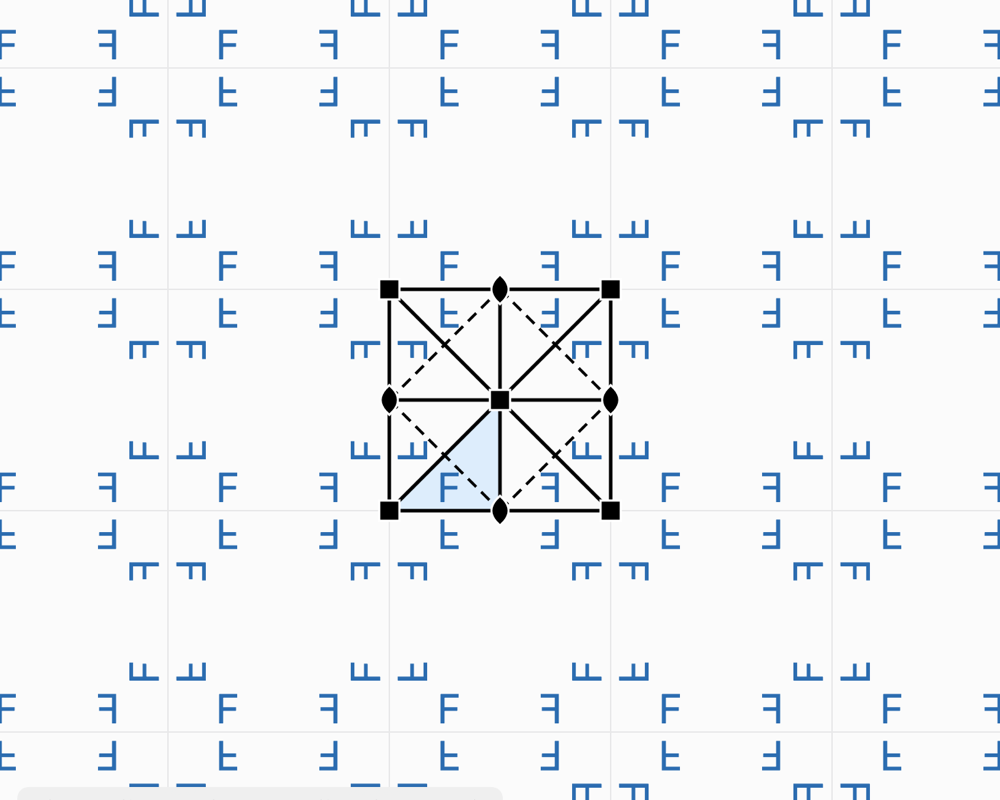
A plane group such as p4gm, a space group such as Fm-3m, or any of the 530 settings of the Tables. Its symmetry elements appear, drawn as in the Tables.
Place a motif
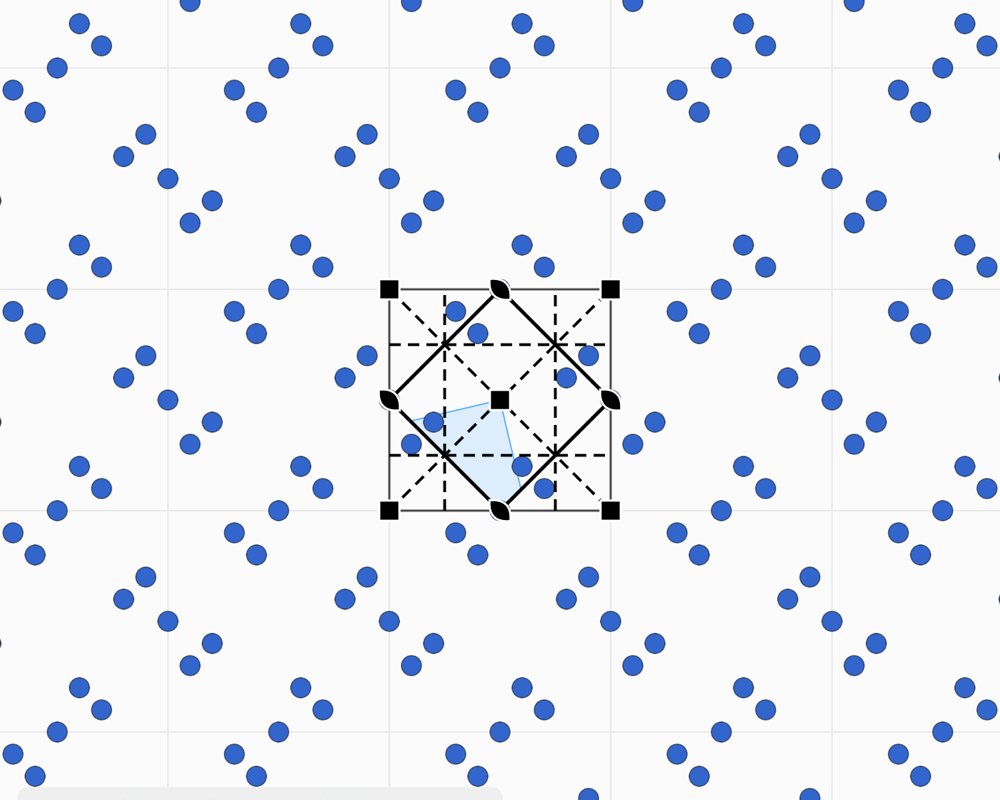
An atom, a letter, a freehand stroke. All its copies appear at once: turned by the rotations, mirrored by the reflections.
See what follows
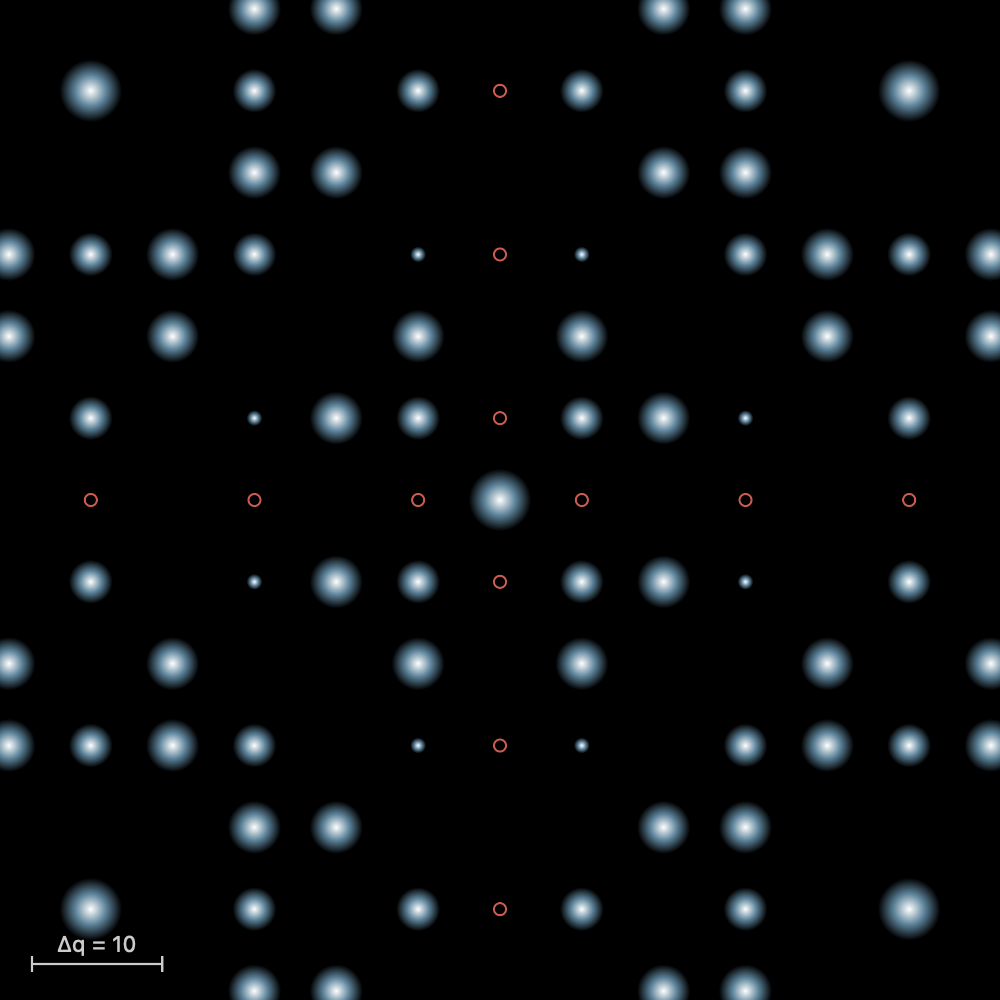
Wyckoff positions, multiplicities, the diffraction pattern and its systematic absences: everything is computed exactly, and the tutor checks your answers.
What you will find
The crystal
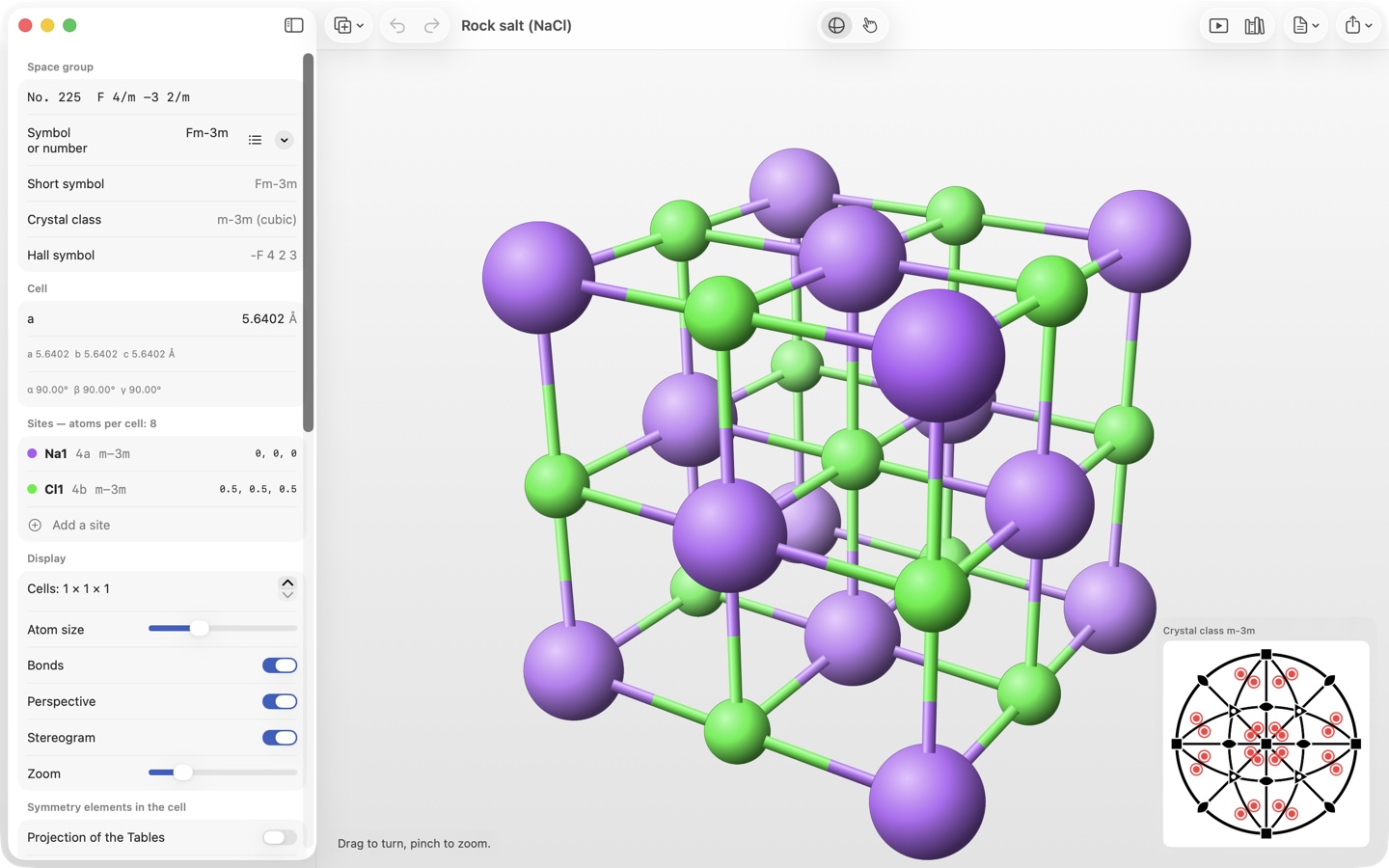
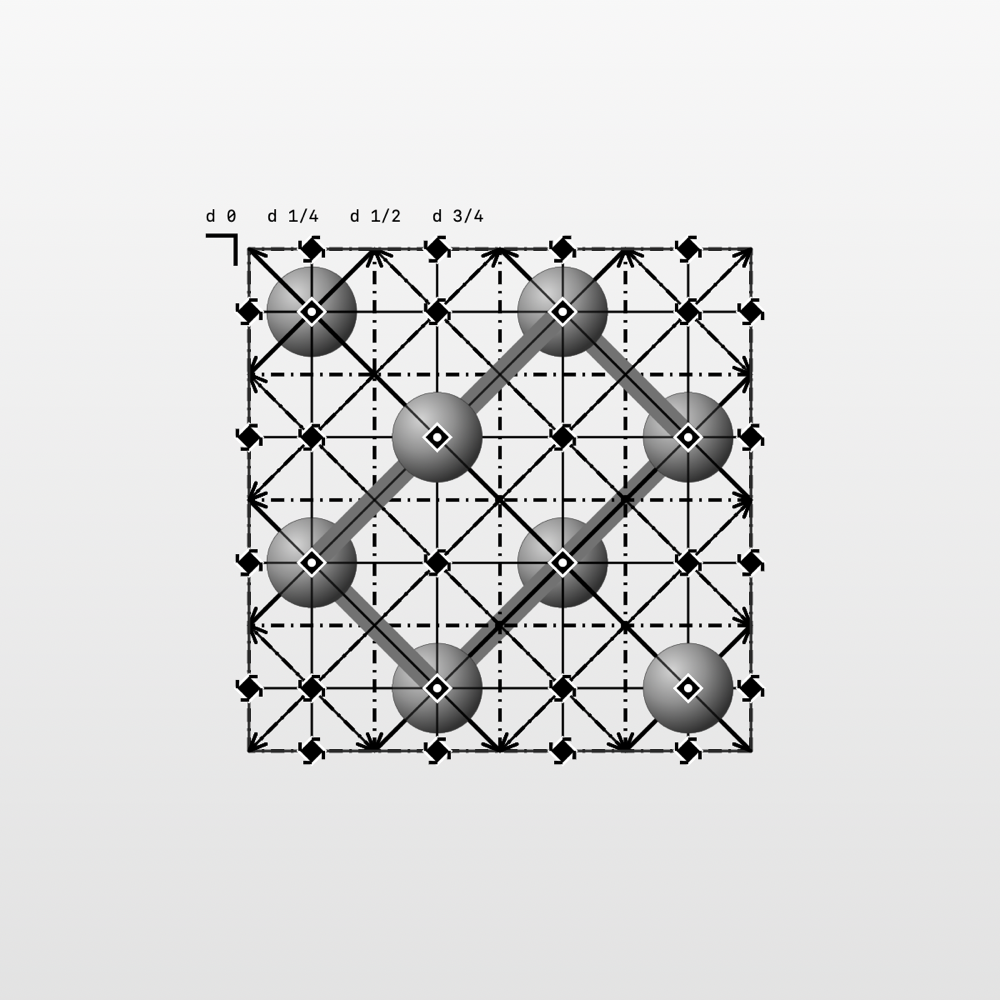
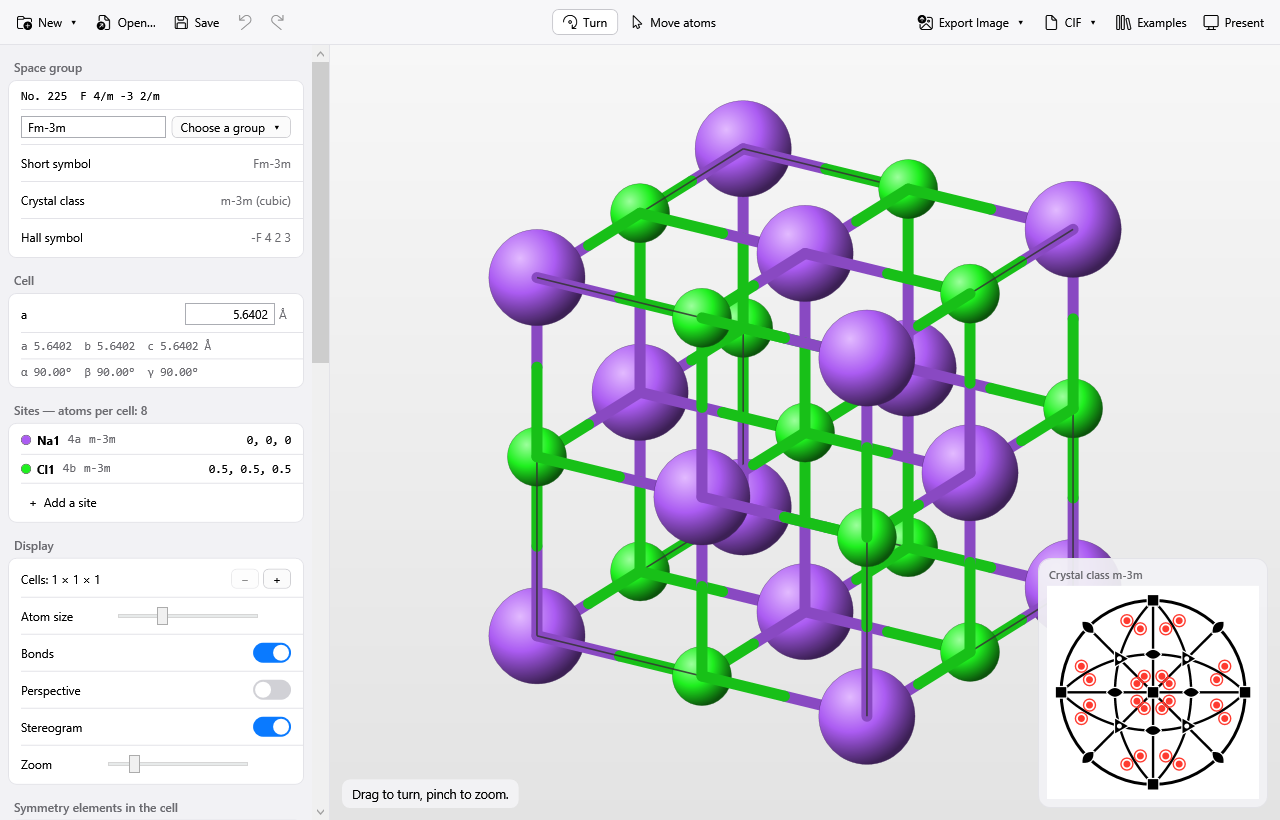
The 230 space groups in their 530 settings of the International Tables, by number, Hermann–Mauguin or Hall symbol. Place an atom: Laue gives its Wyckoff position, multiplicity and site symmetry, and snaps it onto special positions.
Symmetry, drawn
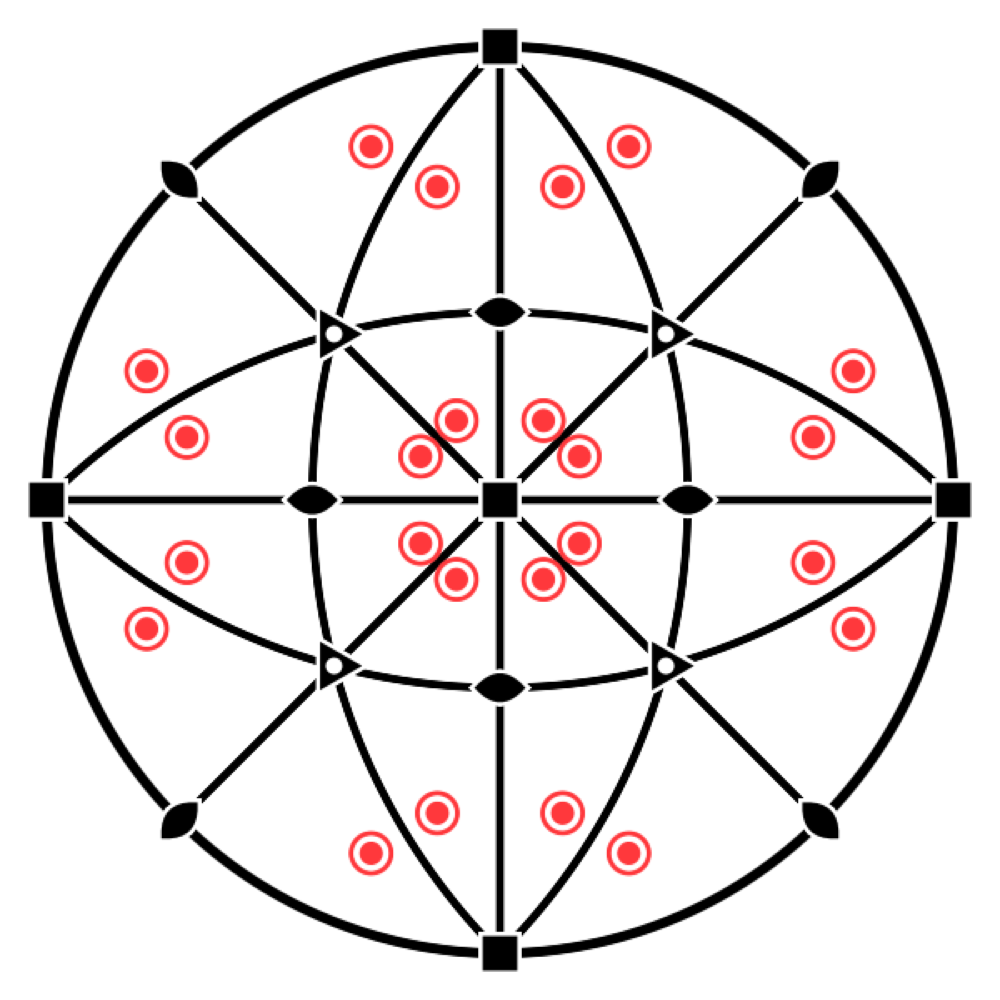
Rotation and screw axes, mirror and glide planes, inversion centres, with the symbols of the Tables. Look at the crystal along any element, show the projection of the Tables, or the stereogram of the point group and of each site.
The plane
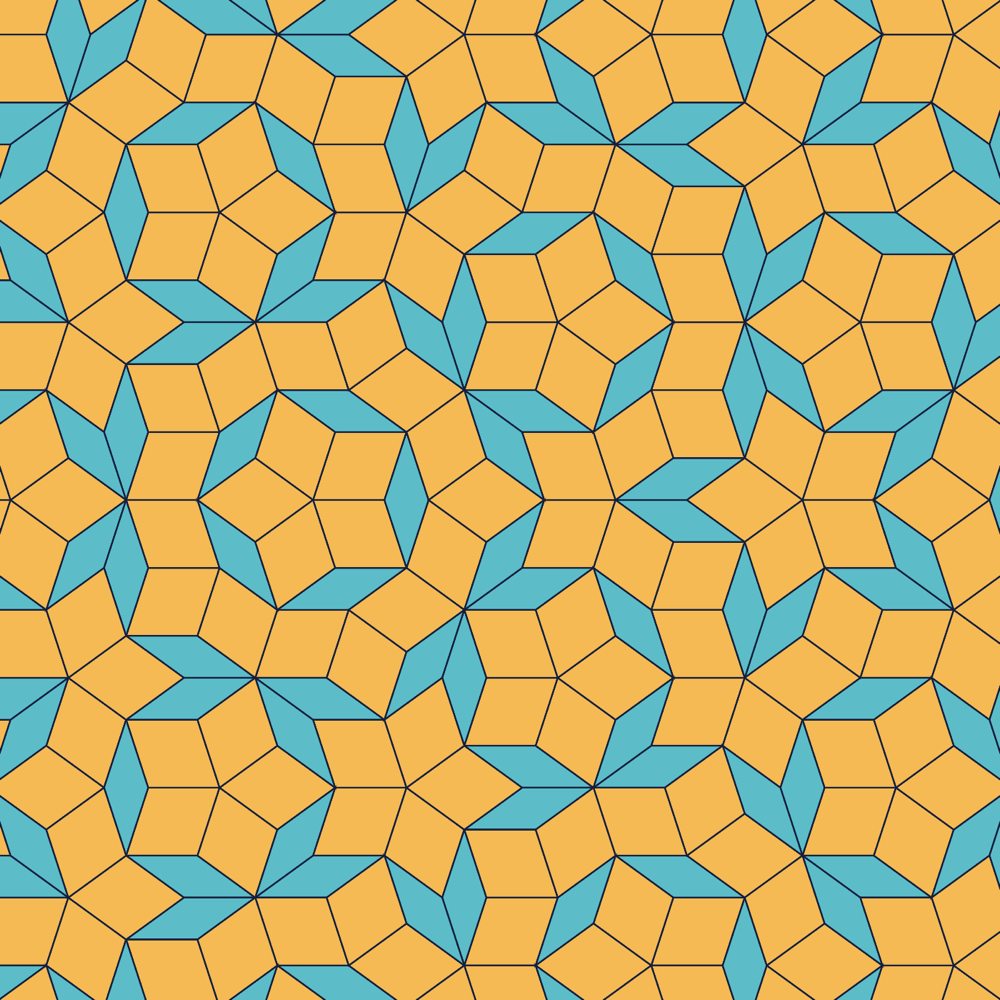
The 17 plane groups and their fundamental domain. Place motifs — shapes, letters, emoji, small pictures — or draw freely: every stroke is repeated by the group, turned by the rotations, mirrored by the reflections.
Quasicrystals
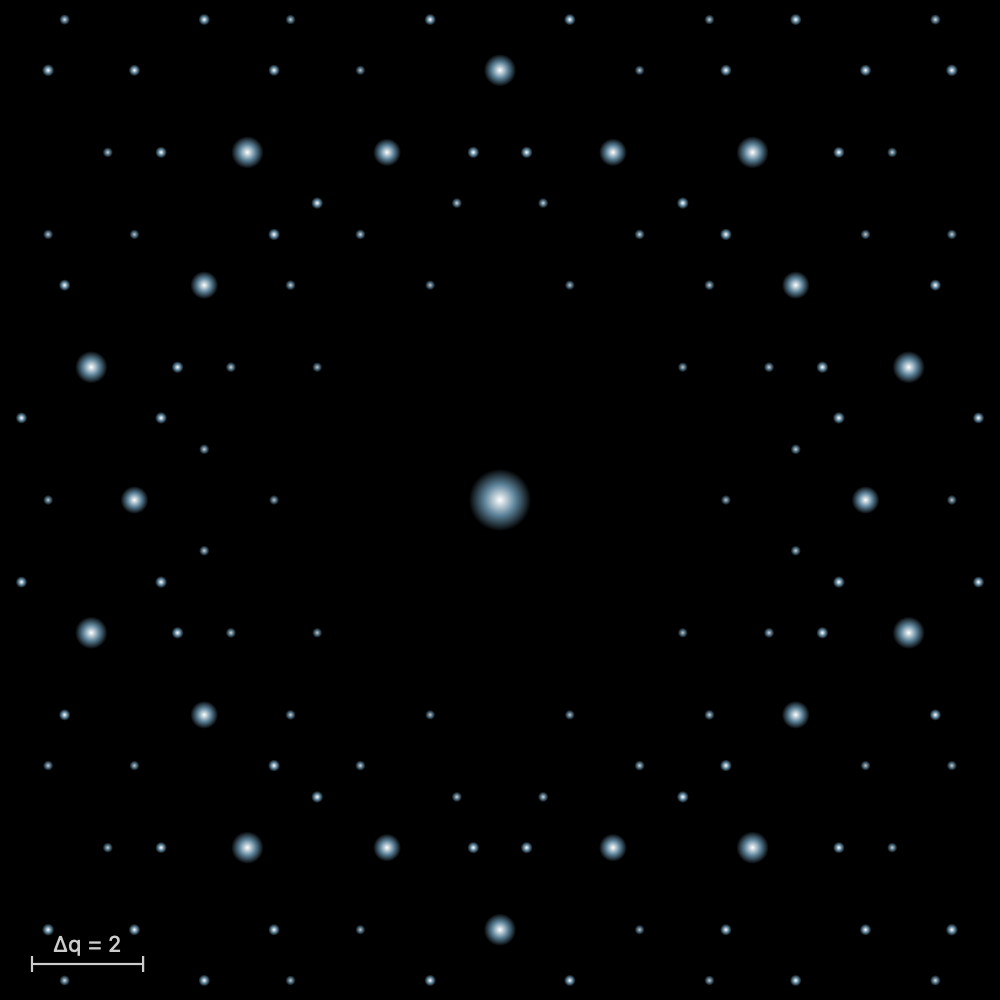
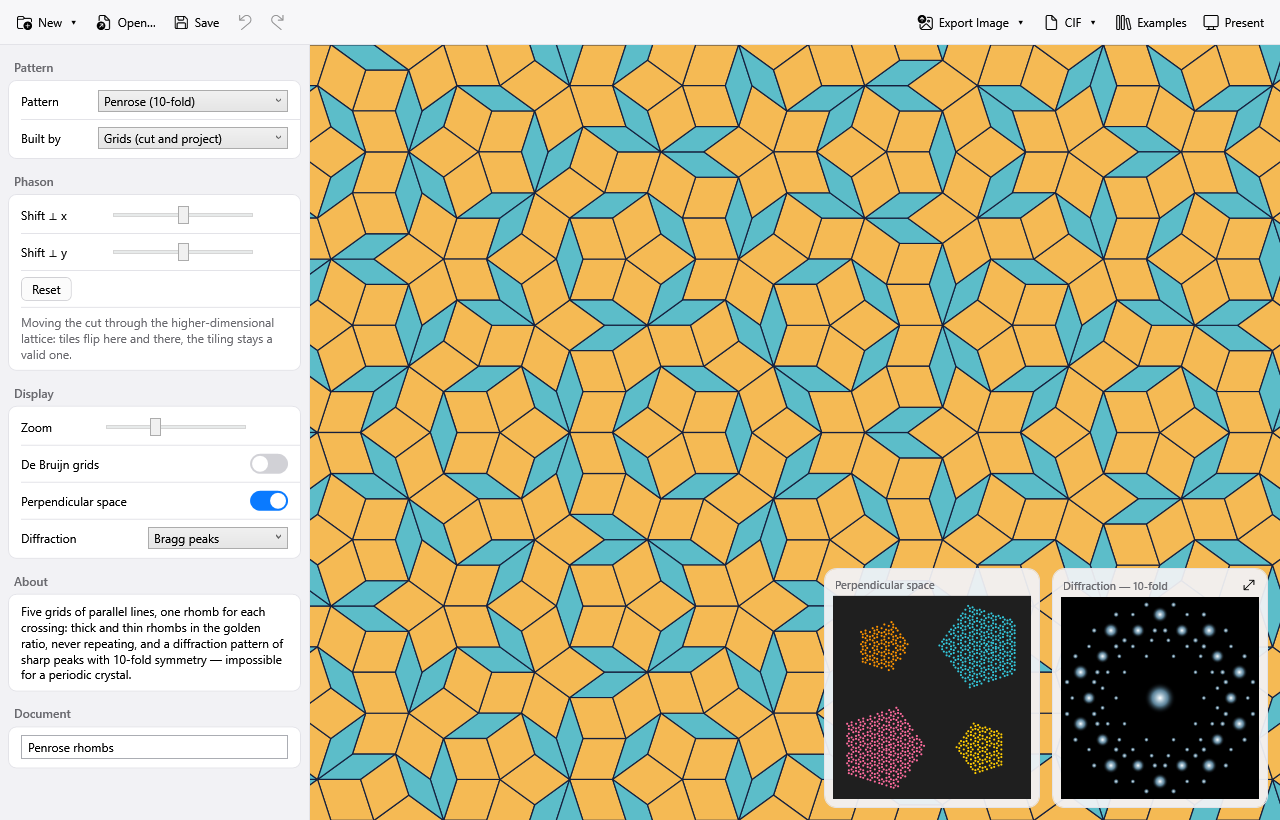
Penrose, Ammann–Beenker and dodecagonal tilings, by de Bruijn's grids or by inflation, with perpendicular space and phasons. And stranger sets: the visible points of a lattice, ordered without being periodic.
Diffraction
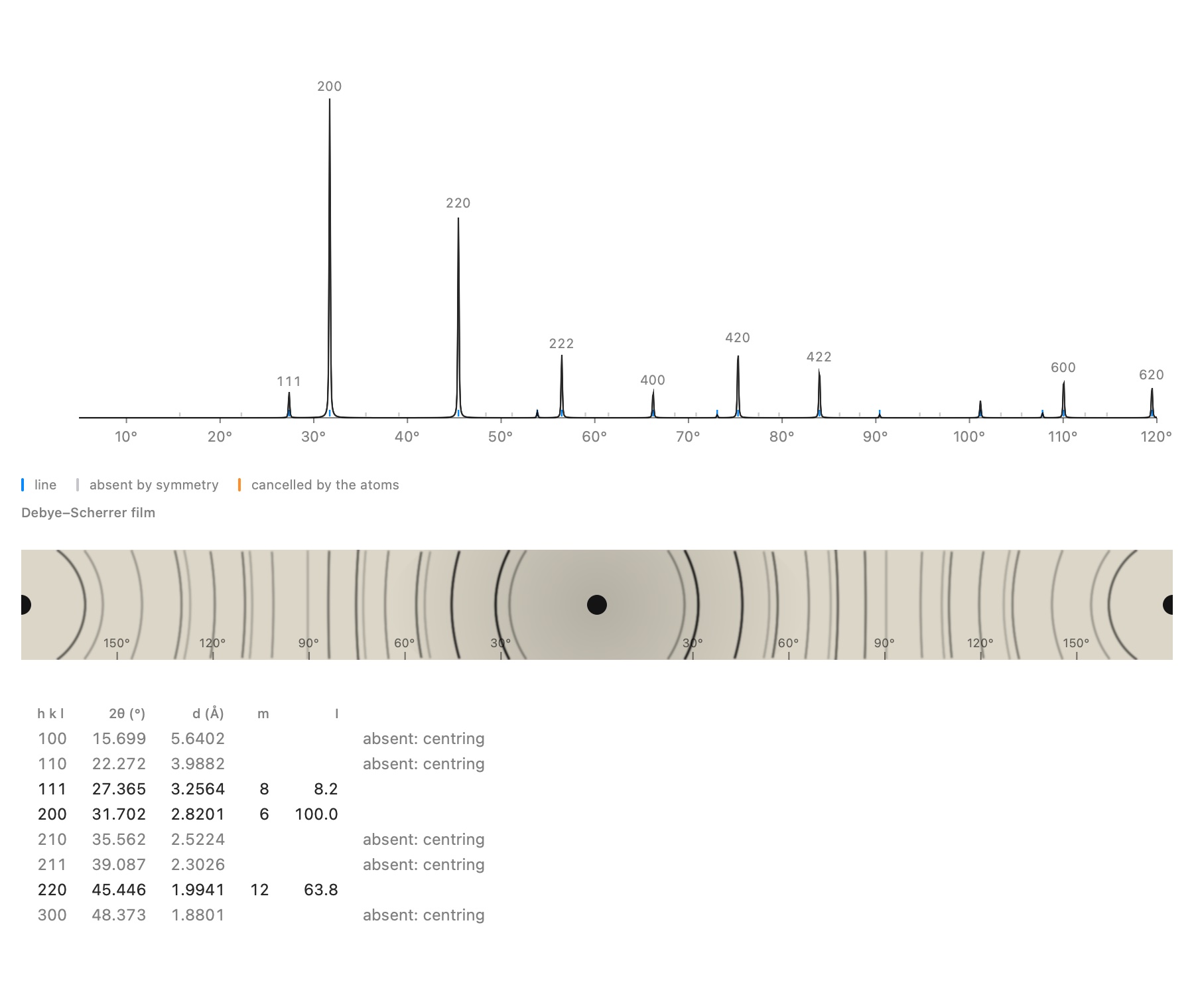
The powder pattern of every crystal, for X-rays or neutrons, its absences explained and its Debye–Scherrer film; the pattern of every tiling, with its Laue class; the Bragg peaks of quasicrystals. Enlarge, zoom in — the pattern is recomputed, not magnified —, export.
Electrons and vibrations
The band structure of any crystal along the usual paths of its Brillouin zone: the gap, direct or indirect, the density of states and, for semiconductors and insulators, the absorption of light. The phonons along the same paths, with the LO–TO splitting of ionic crystals. Published models, compared with measurements.
Printing and fabric
The motif alone at a physical size, as PDF, SVG, PNG or TIFF; seamless repeats — straight, half-drop or half-brick — for fabric and wallpaper; a print-ready PDF with bleed and crop marks, and separations for screen printing.
The tutor
Exercises in which the engine checks every answer, and explains it when it is wrong: Wyckoff positions, multiplicities, site symmetries, identifying a plane group. Ready-made examples: rock salt, diamond, quartz, hexagonal close packing.
What it looks like
On Windows too
The same app on PC, Windows 10 and 11, x64 and ARM64: the same exact engine, the same workshops, the same examples, the same .laue documents, interchangeable with the Mac and the iPad, the same interface in 24 languages. PNG and vector PDF export is there too.
Exact
Laue computes with exact rational numbers: 1/3 stays 1/3, and a special position is recognised without any tolerance. What the engine states is checked by a test suite:
| Check | Reference |
|---|---|
| The 530 settings of the 230 space groups, operation by operation | spglib |
| The 3,467 Wyckoff positions and their letters | spglib, International Tables |
| The symmetry elements of every setting | full Hermann–Mauguin symbols |
| The systematic absences of the 17 plane groups | rules of the Tables |
| The diffraction of visible and k-free points | Baake, Moody and Pleasants' formula, cross-checked by Fourier transform |
Who is it for?
For the student meeting space groups for the first time, who wants to see what each operation does; for the teacher preparing a lecture, an exercise and its solution, and projecting it in presentation mode; for the researcher who opens a CIF, checks a site symmetry or a multiplicity, and exports a vector figure for a paper.